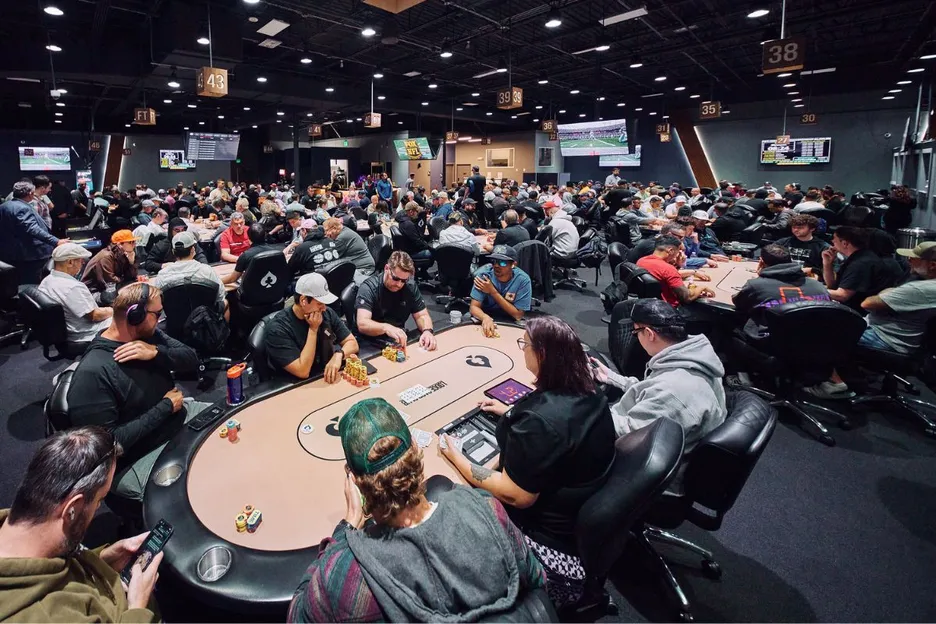
A month ago, poker vlogger KDog sparked debate by claiming that Texas poker games are drying up due to an influx of European grinders. According to him, these players arrive for a few months at a time, put in marathon sessions—sometimes ten hours a day—and grind relentlessly for profit. The result, he argues, is tougher games, less fun, and a shrinking action pool. His proposed fix? Ban them from Texas poker rooms altogether.
The topic gained enough traction that PokerNews’ own Sarah Herring dedicated an episode of The Showdown to the question. It’s a provocative idea—but one that deserves a closer look.
My Two Cents (Or Zwei Pfennigs)
Let’s cut to the chase: the idea of banning any group of players from a public poker room is absurd.
First, some terminology. I’m not comfortable with “Euros” as a blanket label. Not all Europeans grind for profit, and not all for-profit grinders are European. A more accurate term is For-Profit Tourists (FPTs): players who travel, rent short-term housing, and treat poker like a full-time job while they’re in town.
With that distinction made, my objection to banning FPTs rests on two main points.
It’s Completely Impractical
Public poker rooms—those operating under state licenses—would be skating on extremely thin ice if they tried to exclude players based on where they’re from or how they play. The regulatory and legal headaches alone make this a non-starter.
Even so-called “social clubs” like The Lodge or Texas Card House effectively function as public accommodations. Membership screening is minimal, marketing is broad, and access is open. A Texas card club cannot legally deny someone entry based on nationality, race, or gender—and it’s hard to imagine them successfully arguing they should be allowed to bar someone because they’re Spanish and run an aggressive preflop strategy.
And where would it stop? Do you ban out-of-state players? Only foreigners? Only winning players? Anyone who plays more than eight hours a day?
It’s an idea that might sound appealing in a short video, but it collapses under even minimal scrutiny.
It’s Just Protectionism in Disguise
At its core, this argument echoes one of the oldest refrains in economics: “They’re coming to take our jobs.”
FPTs are doing exactly what capitalism encourages—studying the game, working hard, and competing efficiently. History shows that protectionism doesn’t work. You can’t wall off innovation, discipline, or talent. All you do is slow progress and weaken your own ecosystem.
No player is entitled to exclusive access to weaker competition. Poker doesn’t work that way. What you’re entitled to is a seat, your chips, and the right to compete. If someone else is beating you—whether they’re from Dallas or Düsseldorf—the answer isn’t to ask management to lock the doors. It’s to improve.
Study more. Fix your leaks. Put in smarter volume. Take better care of yourself. Asking for selective bans isn’t just futile—it runs counter to the competitive spirit poker is built on.
So What Is the Solution?
To be fair, I’m not disputing the claim that some higher-stakes games in Texas are rough right now. I’ve heard similar reports from other major poker hubs as well. Many of those games are filled with highly motivated, professional-level players, including FPTs.
The truth is, I don’t know that there is an easy solution.
I lived through the online poker boom of the early 2000s, when anyone with basic competence could print money. Over time, the edge narrowed. Eventually, only the very best players made consistent profits. Fast forward to 2026, and online poker is largely an elite game.
Is live poker destined to follow the same path, just on a delayed timeline? Maybe. There are reasons it could last longer, but that’s a discussion for another day.
What seems certain is this: the best players will continue to make a living. But who qualifies as “the best,” and how many of them there are, has always been a moving target. Where each of us lands on that spectrum depends on how well we compete—not on what passport we carry.