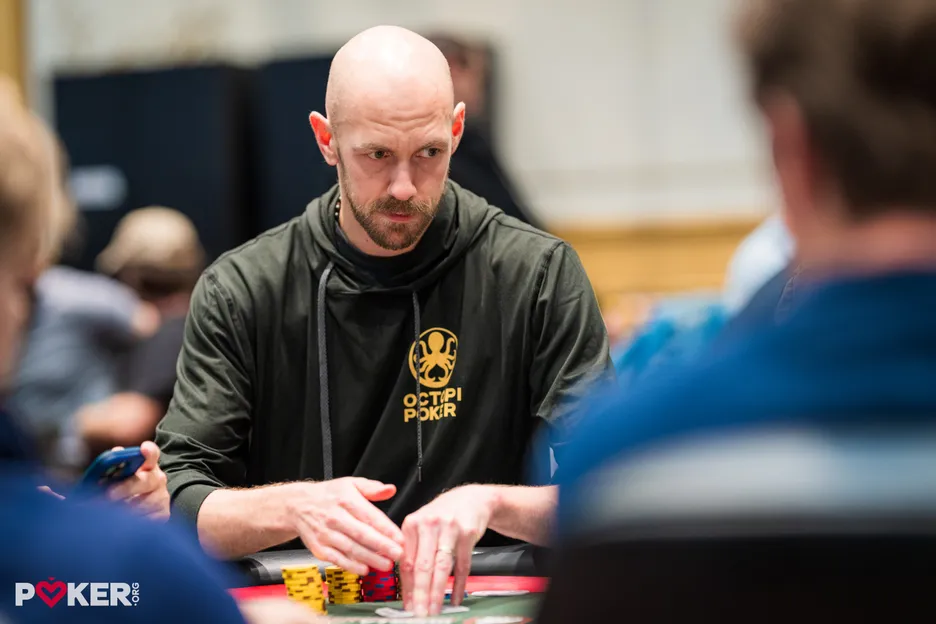
With more than $76 million in recorded live tournament earnings, Stephen Chidwick sits just a couple of big scores away from the very top of poker’s all-time money list. By any surface-level metric, the British pro stands among the most successful tournament players the game has ever seen.
That status, combined with Chidwick’s thoughtful and understated demeanor, makes it notable whenever he opens up publicly. He doesn’t speak often, but when he does, the poker world tends to listen.
This week, players got that opportunity thanks to a Reddit Ask Me Anything session, conducted through the Octopi Poker account, the training site Chidwick represents. The AMA offered rare insight into how one of poker’s elite minds thinks about the game, his career, and—most intriguingly—his finances.
What Does a Super High Roller Actually Earn?
One of the most common frustrations with poker’s all-time money list is that it tells only half the story. The Hendon Mob tracks tournament payouts, but not buy-ins. As a result, it shows gross winnings, not profit.
Without knowing how much players spent to generate those results, it’s impossible to tell whether someone is wildly successful or just barely breaking even.
Chidwick addressed that gap directly. Asked how much of his $76 million in earnings represents real profit, he estimated the figure to be somewhere between $5 million and $10 million.
That means his net tournament profit is likely just 6.5% to 13% of his recorded winnings.
Considering that Chidwick’s live results span roughly 18 years, this puts his average annual tournament profit somewhere between $277,000 and $555,000.
Those are excellent numbers by any normal standard—but perhaps surprising given his reputation as one of the most dominant tournament players of his generation.
Poker Money in Perspective
Put another way, Chidwick’s tournament earnings place him in the same general income range as highly successful professionals such as plastic surgeons, anesthesiologists, or senior software architects.
Of course, the comparison only goes so far. Chidwick plays a card game for a living, sets his own schedule, and avoids many of the pressures associated with life-and-death professions. That said, high-stakes poker carries its own psychological stress, financial swings, and relentless competition.
Still, the numbers challenge the assumption that sitting atop the money list automatically translates into unimaginable wealth.
Applying the Same Lens to Poker’s Legends
Once you start thinking this way, it’s hard not to run similar estimates on other players near the top of the list.
Phil Ivey’s $54 million in recorded tournament earnings might translate to roughly $3.5 to $7 million in lifetime tournament profit, spread over nearly 30 years.
Phil Hellmuth’s $31 million could mean somewhere between $2 million and $4 million over almost four decades, averaging close to $100,000 per year.
Daniel Negreanu’s $57 million likely works out to around $3.7 to $7.5 million across a 30-year career.
Even someone like Darren Elias, currently ranked around 100th all-time with $15 million in earnings, might realistically be looking at $1 million to $2 million in tournament profit over roughly 18 years.
None of these figures are small—but they’re far more grounded than the headline numbers suggest.
A Big Pinch of Salt
All of this comes with a major caveat. These are rough estimates at best.
Chidwick himself admitted he only has a vague sense of his cumulative profit. Many players earn significant money from cash games, have sponsorship deals, or invest in other players by buying or swapping action. Chidwick noted that in most high-stakes tournaments he plays, he typically has financial exposure to two or three other players.
Those variables can dramatically alter the bottom line.
Even so, it’s still sobering to consider that one of the most consistent and decorated tournament players in history may earn less, over time, than a top-tier corporate lawyer. Poker’s money lists suddenly look a lot less definitive.
Chidwick’s ‘Rounders’ Moment
The AMA wasn’t all about numbers. Chidwick also shared a personal highlight that reads straight out of a poker movie.
Asked about the most memorable hand of his career, he went all the way back to his first World Series of Poker, 16 years ago, in the $10,000 no-limit single draw event—where he found himself playing a pot against Doyle Brunson.
Chidwick three-bet from the big blind against Brunson’s late-position open and stood pat with a jack-low hand, which he described as relatively weak. Brunson drew one card. Chidwick checked. Brunson fired a large bet.
Chidwick responded by check-raising all-in as a bluff, for not much more. Brunson sat with the decision for a while, muttering to himself, before eventually folding.
Chidwick showed the jack.
Brunson smiled and said, “You’ve got my number, kid.”
Chidwick admits that, in that moment, he felt unstoppable.